

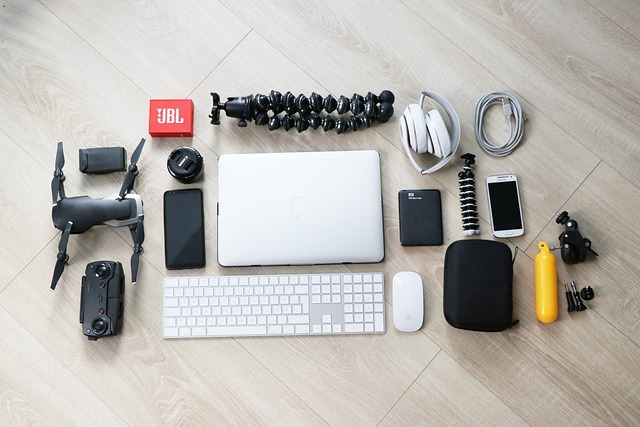
Devices & Electronics Products such as wearables, laptops, smartphones, and accessories are available through e-commerce. Consumers benefit from quick delivery, safe payments, and convenience. Global reach, consumer insights, and scalable sales are all advantageous to businesses. Long-term growth and customer trust are guaranteed by competitive pricing, warranties, and after-sales service.
📘 Syllabus: How to Start Electronics & Gadgets E-Commerce on Low Budget
1. Basic Foundation
- Understand electronics & gadgets market (mobiles, accessories, smartwatches, etc.)
- Learn difference between wholesale, dropshipping, and affiliate selling
- Identify low-investment models (dropshipping & reselling)
2. Market Research
- Find trending gadgets (power banks, earbuds, chargers, smart devices)
- Research competitors (Amazon, Flipkart, niche stores)
- Use tools like Google Trends, Jungle Scout, Meesho, Indiamart for product ideas
3. Business Setup (Low Cost)
- Register small business under sole proprietorship (optional at start)
- Open business bank account and UPI payment system
- GST registration (only if crossing ₹40L turnover, else optional in beginning)
4. Supplier & Product Sourcing
- Start with dropshipping platforms (Meesho, GlowRoad, BaapStore, Shopify apps)
- Connect with local wholesalers in Delhi, Mumbai, Surat, Jaipur electronics markets
- Begin with 10–20 products only (don’t stock large inventory)
5. Online Store Creation
- Create a free/low-cost store using:
- Shopify (₹1 trial, later upgrade)
- WooCommerce (WordPress + hosting)
- Instamojo/Dukaan app (budget-friendly)
- Focus on mobile-friendly, simple design
6. Product Listing & Branding
- Use high-quality images & videos (supplier provided or your own click)
- Write SEO-friendly descriptions
- Keep attractive but low prices to attract first customers
- Brand name: short, catchy, techy feel
7. Marketing (Zero/Low Budget)
- Free marketing via Instagram Reels, YouTube Shorts, Facebook groups, WhatsApp status
- Run low-budget ads (₹200–₹500 daily Facebook/Instagram ads)
- Collaborate with micro-influencers in gadgets niche
- Offer referral discounts
8. Order & Delivery
- Start with Cash on Delivery (COD) + UPI
- Use courier aggregators like Shiprocket, Delhivery, Bluedart
- Pack in basic branded packaging (stickers, tape—low-budget branding)
9. Customer Support
- Handle queries on WhatsApp Business & Email
- Maintain easy return/refund policy
- Collect customer feedback for trust-building
10. Growth & Scaling
- Slowly add new trending gadgets (smart home devices, wearables)
- Start bulk buying from wholesalers for higher margins
- Launch own brand label (stickers/packaging first → later custom products)
- Expand to Amazon, Flipkart, Snapdeal for more sales
✅ Budget Estimate:
- Website/App setup: ₹2,000 – ₹5,000
- Marketing: ₹5,000 – ₹10,000 (initial 2 months)
- Inventory (if needed): ₹10,000 (can skip with dropshipping)
👉 So the total start can be ₹5,000 – ₹15,000 only.
gadgets e-commerce business,For starting an electronics & Gadgets E-Commerce Business, you need some important documents for legal, financial, and operational setup. Here’s a list:
✅ Required Documents
- —PrivateBusiness Registration Certificate – Private Limited, LLP, or Sole Proprietorship registration.
- —MandatoryGST Registration – Mandatory for selling electronics and gadgets in India.
- PAN Card – Company or individual PAN for taxation.
- Aadhar Card / Identity Proof – Owner/partner identity verification.
- —ForBank Account (Current Account) – For business transactions.
- Trade License / Shop & Establishment Certificate – From local municipal authority.
- —IfImport-Export Code (IEC) – If importing gadgets or electronics.
- —ToTrademark Registration – To protect your brand name and logo.
- Udyam/MSME Registration—For small and medium businesses (optional but beneficial).
- Partnership Deed / MOA & AOA – If the company has partners.
- Vendor/Supplier Agreement—For secure supply chain and warranty support.
- Return & Refund Policy Document—Required for marketplace and customer trust.
- Compliance Certificates – BIS, WPC, or other certifications depending on the electronic product.
👉 Marketplaces like Amazon, Flipkart, and Meesho may also ask for GST, PAN, bank details, and brand authorization letters.
- Here’s a curated list of reputable electronics & gadgets product suppliers and wholesale platforms—perfect for e-commerce businesses seeking reliable sourcing. I’ve grouped them by region and specialization for clarity:
Global Suppliers & Platforms
- Worldwide Brands—A directory service connecting retailers with factory-authorized wholesalers and manufacturers globally, especially useful for small to medium e-commerce businesses.
(Wikipedia) - Global Sources’ “Cool Gadgets” Section—Offers listings of verified wholesalers and manufacturers from markets like China and India.
(Global Sources) - Made-in-China.com (Wholesale Electronics)—A major portal showcasing a wide range of electronics products and supplier listings, mostly from China.
(Made-in-China) - SupplyLeader.com—Features discounted electronics and bulk-buy options with analytics, customization, and global shipping support.
(supplyleader.com) - Syncee—A dropshipping and wholesale platform offering access to over 12,000 suppliers in tech gadgets, computer accessories, and more, with flexible ordering and integration with e-commerce platforms.
(Syncee)
Leading Global Distributors
From the 2024 Top 50 Global Electronics Distributors list, these industry giants are key players in large-scale electronics distribution:
- Arrow Electronics
- Avnet
- Digi-Key
- Future Electronics
- TTI, Inc.
- Mouser Electronics
- RS Group (formerly Allied Electronics)
- Newark Farnell
…and more
(supplychainconnect.com)
Additionally, Supreme Components International (SCI)—based in Singapore—distributes high-tech electronic and LED components across 45+ countries.
(Wikipedia)
India-Focused Opportunities
- IndiaMART—one of India’s largest B2B marketplaces; a treasure trove for sourcing from Indian manufacturers, exporters, and wholesalers across electronics and gadgets.
(blog.chinavasion.com) - IEEMA (Indian Electrical and Electronics Manufacturers’ Association)—An influential trade body with around 900 member companies; their member directories and trade events (like ELECRAMA) are invaluable for sourcing and networking.
(Wikipedia)
U.S. Suppliers & Directories
- WholesaleCentral (Electronics & Electronics Novelties)—Aggregates dozens of U.S.-based wholesale suppliers across audio, video, gadgets, and novelty electronics.
(Wholesale Central) - TradeWheel—An international marketplace with many electronics wholesale listings, particularly showcasing China’s export strength and vendor reach.
(TradeWheel) - Ezilon’s U.S. Wholesale Electronics—A curated directory of U.S. wholesale electronics suppliers, including firms like 888 Digital, Petra, Direct Liquidation LLP, and others.
(search.ezilon.com)
Summary Table
| Region/Platform | Strengths & Highlights |
|---|---|
| Worldwide Brands | Access to factory-authorized suppliers globally |
| Global Sources / Made-in-China | Vast product catalogs—great for gadgets & components |
| SupplyLeader | Data-driven sourcing, customization, analytics |
| Syncee | Dropship + wholesale + e-commerce platform integration |
| Leading Distributors (e.g., Digi-Key) | High-volume, wide component coverage worldwide |
| Supreme Components (SCI) | High-tech component distribution across Asia & beyond |
| IndiaMART/IEEMA | Local sourcing, especially for Indian-made electronics |
| U.S. WholesaleCentral / Ezilon | U.S.-based suppliers for gadgets, novelties, electronics components |
| TradeWheel | Broad international supplier network, strong China and U.S. electronics representation |
Next Steps Tailored to You
- What’s your scope?
Are you targeting bulk components (e.g., resistors, PCBs) or consumer gadgets (e.g., earphones, smart accessories)? - Where are you sourcing from?
Focusing on India, China, the U.S., or globally? This affects which platforms are best suited for you. - Need dropshipping functionality or wholesale only?
Syncee caters to dropshipping and integrates with platform stores like Shopify and WooCommerce. Others are more focused on traditional wholesale.
- Here’s a refined ranking of major e-commerce platforms and marketplaces, based on available data for the number of users (or sites/stores) and market share. While not every platform discloses exact user counts uniformly, the table presents the most reliable estimates currently available:
| Rank | Platform / Marketplace | Approx. Users / Stores / Active Buyers | Notes & Source |
|---|---|---|---|
| 1 | WooCommerce | ~4.77 million stores (34.0%) | Estimated from AfterShip data (AfterShip) |
| 2 | Shopify | ~4.6 million stores | TechRadar (2025) and Oberlo figures (TechRadar, Oberlo) |
| 3 | Squarespace Commerce / Squarespace | ~2.5 million sites (~15%) | BuiltWith stats (EcommerceGold) |
| 4 | Wix Stores | ~2.28 million sites (~14%) | BuiltWith stats (EcommerceGold) |
| 5 | Temu | ~92 million monthly users | Le Monde / EU DSA data (Le Monde.fr) |
| 6 | Amazon (Marketplace) | ~300 million+ active users | Shopify Community analysis (Shopify Community) |
| 7 | eBay | ~132 million active buyers | Analyzify data (Analyzify) |
| 8 | Etsy | ~91.5 million active buyers | Analyzify data (Analyzify) |
| 9 | Tokopedia (Indonesia) | ~100 million monthly active users | Wikipedia data (Wikipedia) |
| 10 | Meesho (India) | ~120 million monthly users | Wikipedia data (Wikipedia) |
| 11 | Tmall (China) | >500 million monthly active users (2018) | Historical figure—it likely has grown since (Wikipedia) |
| 12 | Mercari (Japan) | ~20 million monthly active users | Academia study (arXiv) |
Highlights & Context
- WooCommerce and Shopify dominate in terms of number of websites/stores powered, with over 4.7 million and 4.6 million respectively. WooCommerce holds approximately 34% market share and Shopify around 22% (AfterShip, TechRadar, Oberlo).
- Squarespace and Wix also have substantial footprints—each powering over 2 million sites (EcommerceGold).
- Temu stands out as a marketplace platform with a very high volume of active monthly users (~92 million) (Le Monde.fr).
- Traditional giants like Amazon, eBay, and Etsy maintain strong user bases and are ranked here by active users rather than stores (Shopify Community, Analyzify).
- Regional platforms like Tokopedia (Indonesia) and Meesho (India) are also noteworthy due to their high user numbers (Wikipedia).
- Tmall‘s figure is from 2018 (over 500 million users), which suggests it’s likely even larger now (Wikipedia).
- Mercari offers an additional example from Japan, with about 20 million monthly users (arXiv).
Summary
- Platform leaders by store count: WooCommerce (#1), Shopify (#2), then Squarespace and Wix.
- Marketplace/user base leaders: Temu, Amazon, eBay, Etsy, with rising regional players like Meesho, Tokopedia, and historical giants like Tmall.
Packing Materials for Electronics & Gadgets
- Corrugated Boxes – Strong cardboard boxes for safe shipping of electronics.
- Bubble Wrap – Protects fragile gadgets from shocks and scratches.
- Foam Sheets & Inserts – Provide cushioning and absorb impact.
- Anti-Static Bags – Special bags to protect electronic components from static damage.
- Air Cushion Packaging – Inflatable air pillows for filling empty spaces in boxes.
- Thermocol Sheets – Lightweight material to keep products safe during transit.
- Packing Peanuts – Small pieces of foam to fill gaps inside packaging.
- Adhesive Tape – Strong tape to seal boxes securely.
- Shrink Wrap & Stretch Film – Wraps products or boxes to keep them intact.
- Fragile Stickers & Labels – To alert couriers about delicate items.
- Here are some common problems that can arise in Electronics & Gadgets E-Commerce:
- Product Quality Issues – Customers may receive damaged, defective, or low-quality gadgets.
- High Return Rate – Electronics often face a higher number of returns due to technical faults.
- Warranty & Guarantee Claims – Handling customer warranty or repair claims can be complicated.
- Logistics & Shipping Damage – Fragile electronics may get damaged during delivery.
- Technical Support Requirement – Customers expect after-sales service and troubleshooting.
- Price Competition – Many sellers offer similar gadgets, leading to price wars.
- Fake or Duplicate Products – Risk of counterfeit electronics being sold online.
- Inventory Management – Rapid technology changes make stock obsolete quickly.
- Payment & Fraud Issues – Risk of fraudulent transactions and chargebacks.
- Customer Trust – Building trust is difficult without proper reviews and brand reputation.
- Here are some possible solutions for Electronics & Gadgets E-Commerce business:
- Quality Products – Partner with reliable suppliers and brands to ensure genuine and durable gadgets.
- Competitive Pricing – Offer affordable prices with discounts, bundle deals, and seasonal offers.
- User-Friendly Website – Build a fast, secure, and mobile-friendly platform for smooth shopping.
- Multiple Payment Options – Provide UPI, debit/credit cards, COD, EMI, and wallet payments.
- Fast Delivery & Tracking – Tie up with trusted logistics partners for quick and safe delivery.
- Customer Support – Offer 24/7 chat, email, and call support for better customer service.
- Return & Warranty Policy – Provide easy returns, replacements, and warranty claims.
- Product Details – Add clear specifications, comparison options, and customer reviews.
- Digital Marketing – Use SEO, social media, influencer marketing, and ads to increase sales.
- Data Security – Ensure safe transactions with SSL certificates and secure payment gateways.
- Here’s a simple explanation for Profit and Loss Calculation in Electronics & Gadgets E-Commerce:
1. Find Cost Price (CP)
- The total amount spent on purchasing a product.
- Includes: product purchase price + shipping charges + packaging cost + platform fees (if any).
Formula:
👉 CP = Product Cost + Shipping Cost + Packaging Cost + Platform Fees
2. Find Selling Price (SP)
- The amount at which you sell the product to the customer.
- Includes: base price + delivery charges (if customer pays) – discounts given.
Formula:
👉 SP = Selling Amount – Discount + Delivery Charges (if applicable)
3. Profit Calculation
If SP > CP → You get a profit.
Formula:
👉 Profit = SP – CP
4. Loss Calculation
If CP > SP → You face a loss.
Formula:
👉 Loss = CP – SP
5. Profit or Loss Percentage
To measure business performance in percentage:
- Profit % = (Profit ÷ CP) × 100
- Loss % = (Loss ÷ CP) × 100
✅ Example:
- Product Cost = ₹5,000
- Shipping + Packaging = ₹500
- Total CP = ₹5,500
- Selling Price = ₹6,200
Profit = 6,200 – 5,500 = ₹700
Profit % = (700 ÷ 5,500) × 100 = 12.7%
- How to Reach Payment in E-Commerce (Electronics & Gadgets):
- Select Products – Add the items you want to buy to the cart.
- Proceed to Checkout – Go to the checkout page.
- Enter Details – Fill in shipping address and contact details.
- Choose Payment Method – Select options like credit/debit card, net banking, UPI, or cash on delivery.
- Confirm & Pay – Review order and complete the payment securely.
- Get Confirmation – Receive payment and order confirmation via email or SMS.
How to Claim a Return
- Log in to your account on the e-commerce website or app.
- Go to “My Orders” and select the product you want to return.
- Click on “Return” or “Request Return” option.
- Choose the reason for the return (e.g., damaged product, wrong item, defective gadget).
- Upload photos or proof if required.
- Select refund or replacement as per your choice.
- Confirm your return request.
- Pack the product securely in its original packaging.
- Hand over the item to the delivery agent when they come for pickup.
- Track your refund or replacement in the “Return/Refund Status” section.
Leave a Reply